
How to File for a Hardship License — Nebraska
Free to compare
Why Your Hardship Application Might Target the Wrong Program
You received a Nebraska license suspension notice. You searched for hardship license information and found references to the Employment Driving Permit. You downloaded the application form, gathered employment verification, and prepared to file — then discovered at the DMV counter that you're not eligible for the program you researched because your suspension trigger routes you to a different system entirely.
Nebraska runs two separate restricted-driving permit programs that serve different suspension populations and follow different procedural paths. The Employment Driving Permit (EDP) handles most general suspension situations — unpaid tickets, points accumulation, insurance lapse, child support arrears. The Ignition Interlock Permit (IIP) is the mandatory pathway for DUI-related suspensions under Neb. Rev. Stat. § 60-6,211.05. The programs have different application processes, different fees, different eligibility windows, and different vehicle requirements. Applying for the wrong one costs you processing time you can't recover.
“Nebraska runs two separate restricted-driving permit programs — applying for the wrong one costs you processing time you can't recover.”

Have Your Nebraska Proof of Insurance Ready
Get My Nebraska Suspended License Insurance Quote$50
Employment Driving Permit Fee
The application fee for Nebraska's standard Employment Driving Permit is $50, paid at the time of filing. This fee applies to non-DUI suspension situations only; DUI-related suspensions require the Ignition Interlock Permit with separate fee structure and device installation costs.
Nebraska DMV fee schedule (flagged for verification)
Which Permit Path Your Suspension Trigger Routes You To
The trigger that caused your suspension determines which permit program the DMV will process. If your suspension stems from DUI, OWI, refusal to submit to chemical testing, or any alcohol-related violation, you cannot apply for the Employment Driving Permit. Nebraska law routes you exclusively to the Ignition Interlock Permit pathway, which requires installation of a state-approved ignition interlock device in any vehicle you operate during the permit period.
All other suspension triggers — excessive points, unpaid traffic tickets, insurance lapse under Nebraska's electronic verification system (Neb. Rev. Stat. § 60-3,168), child support arrears, failure to appear in court, or medical disqualification review — route to the standard Employment Driving Permit application filed directly with the DMV. This permit does not require ignition interlock installation but restricts driving to approved purposes during approved hours only.
Check your suspension notice for the statutory citation or violation code listed as the suspension reason. References to Neb. Rev. Stat. § 60-498 (administrative license revocation), § 60-6,196 (DUI), or § 60-6,197 (refusal) mean you're in the IIP pathway. References to § 60-4,105 (point suspension), § 60-3,168 (insurance lapse), or failure-to-pay citations mean you're in the EDP pathway.
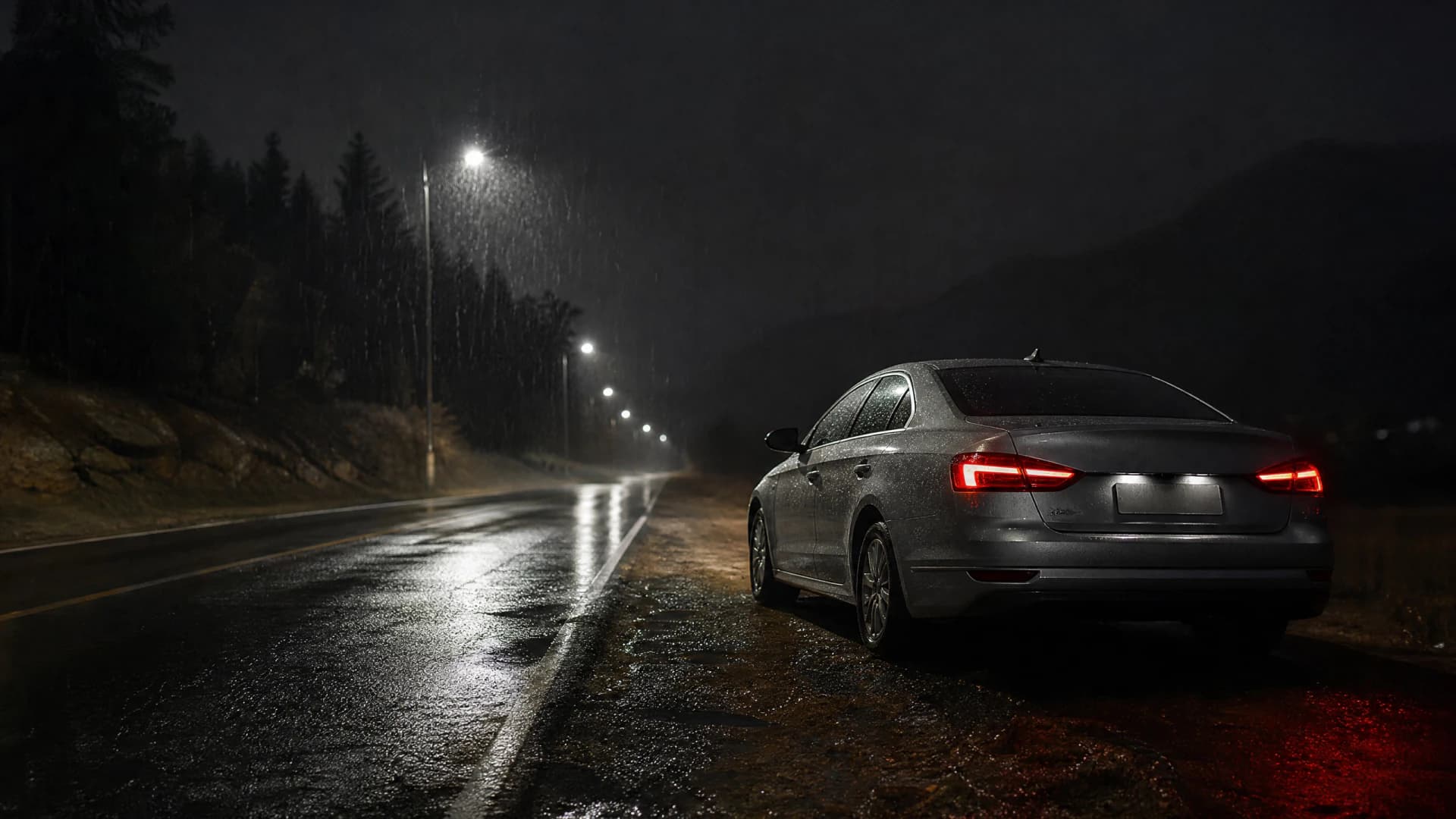
DUI suspensions carry a mandatory 60-day hard suspension before you can apply for the Ignition Interlock Permit — no restricted driving of any kind during that window.





How the Ignition Interlock Permit Process Differs for DUI Suspensions
First-offense DUI administrative revocation in Nebraska carries a 90-day total revocation period, but you cannot apply for any restricted driving privileges during the first 60 days. This is a hard suspension window with zero exceptions. On day 61, you become eligible to apply for the Ignition Interlock Permit, which requires installation of a Nebraska-approved ignition interlock device in every vehicle you will operate.
The IIP application is filed with the court that handled your DUI case, not the DMV. You must provide proof that a state-certified ignition interlock vendor has installed an approved device in your vehicle, proof of SR-22 insurance covering the interlock-equipped vehicle, payment of the installation fee and monthly monitoring fee to the device vendor, and court approval of your restricted driving purposes. The device logs every ignition attempt, every failed breath test, and every attempt to bypass or tamper with the system. Violations reported by the device trigger automatic permit revocation and restart your revocation period from zero.
Second and subsequent DUI offenses carry longer mandatory hard suspension periods before IIP eligibility. The device installation costs and monthly monitoring fees are paid directly to the certified vendor, not the state, and these costs are in addition to the permit application fee and SR-22 insurance premium. Nebraska maintains a list of approved ignition interlock vendors on the DMV website; devices installed by non-approved vendors do not satisfy the legal requirement.
3 years
SR-22 Filing Duration Post-Suspension
Nebraska requires drivers with DUI-related, uninsured-motorist, or serious moving violation suspensions to maintain SR-22 proof of financial responsibility for three years following reinstatement, measured from the date the DMV processes your reinstatement, not from the suspension date or conviction date.
Nebraska DMV reinstatement requirements

SR-22 Insurance Filing Requirements During and After Permit Period
Most Employment Driving Permit applications require SR-22 filing at the time of application. If your suspension resulted from uninsured driving, DUI, reckless driving, or excessive points including serious moving violations, the DMV will not process your permit application without proof of SR-22 coverage on file. If your suspension resulted solely from unpaid tickets, child support arrears, or failure to appear in court, SR-22 may not be legally required, but verify this with the DMV before assuming you can skip it.
The SR-22 is not a separate insurance policy. It is a certificate your auto insurance carrier files electronically with the Nebraska DMV certifying that you carry at least the state minimum liability coverage: $25,000 bodily injury per person, $50,000 bodily injury per accident, and $25,000 property damage. If you do not currently own a vehicle, you need a non-owner SR-22 policy that provides liability coverage when you drive vehicles you do not own. Non-owner SR-22 satisfies Nebraska's filing requirement for permit eligibility and later reinstatement even when you have no vehicle registered in your name.
Filing Now Positions You for Full Reinstatement Later
The Employment Driving Permit or Ignition Interlock Permit does not reinstate your full driving privileges. It is a temporary restricted license that lets you drive for specific approved purposes during your suspension period. When your suspension period ends, you must complete the full reinstatement process: pay the $125 reinstatement fee to the Nebraska DMV, satisfy any court-ordered requirements such as substance abuse evaluation or DUI education classes, provide proof of SR-22 insurance, and in some cases retake the written knowledge test or driving skills test depending on how long your license has been suspended.
Starting the SR-22 filing process now — even if your suspension has months remaining — means the insurance is already in place when you reach your reinstatement eligibility date. Carriers that write SR-22 and non-owner policies in Nebraska include GEICO, Progressive, State Farm, The General, Dairyland, and Bristol West. Comparing quotes from multiple carriers writing your suspension situation is the only way to find the actual rate you will pay, because premiums vary by carrier underwriting rules, your specific violation history, your age, and your county of residence. If you need coverage that keeps you legal during a restricted permit period and positions you for reinstatement when the suspension period ends, compare carriers writing Nebraska SR-22 and non-owner policies now.
What the Employment Driving Permit Application Requires
You file the Employment Driving Permit application directly with the Nebraska Department of Motor Vehicles Driver and Vehicle Records division. Required documentation includes the completed application form (available at dmv.nebraska.gov), written proof of your qualifying purpose — employment verification on company letterhead showing your work schedule and location, school enrollment verification and class schedule, or medical treatment documentation showing appointment frequency and facility address — and proof of SR-22 financial responsibility insurance if your suspension trigger was DUI-related in the past, uninsured driving, or points accumulation including serious moving violations.
The permit restricts you to driving necessary to maintain employment, attend school, obtain medical treatment for yourself or a dependent family member, or fulfill court-ordered obligations such as community service or substance abuse treatment. The DMV defines your approved driving hours and routes based on the documentation you submit. Driving outside approved purposes, hours, or geographic boundaries violates the permit terms and triggers immediate revocation plus extension of your underlying suspension period.
Get Your Free Quote
Get My Nebraska Suspended License Insurance QuoteFrequently Asked Questions
Can I get a hardship license in Nebraska after a DUI?
Yes, but not immediately. Nebraska DUI suspensions require a 60-day hard suspension period with zero driving privileges before you become eligible to apply for an Ignition Interlock Permit. The IIP requires installation of a state-approved ignition interlock device in your vehicle and is filed with the court, not the DMV.
How much does a Nebraska Employment Driving Permit cost?
The application fee is $50, paid at the time you file with the Nebraska DMV. You will also pay SR-22 insurance filing costs if your suspension trigger requires it, and potentially additional fees for required documentation such as substance abuse evaluations depending on your suspension reason.
Do I need SR-22 insurance to get a hardship license in Nebraska?
It depends on what caused your suspension. DUI, uninsured driving, reckless driving, and excessive points suspensions typically require SR-22 filing before the DMV will approve your Employment Driving Permit application. Suspensions for unpaid tickets or child support arrears may not require SR-22, but verify with the DMV before filing.
What happens if I drive outside my approved hours on a Nebraska hardship license?
Driving outside the purposes, hours, or routes approved on your Employment Driving Permit or Ignition Interlock Permit triggers immediate revocation of the permit and extension of your underlying suspension period. For IIP violations, the ignition interlock device logs the violation and reports it automatically to the court and DMV.
Can I use a Nebraska hardship license to drive to the grocery store?
No. The Employment Driving Permit and Ignition Interlock Permit restrict driving to specific approved purposes: work, school, medical treatment, or court-ordered obligations. Personal errands, grocery shopping, and social activities are not approved purposes under Nebraska restricted permit law.
How long does it take to get a hardship license approved in Nebraska?
Processing times vary by permit type and DMV workload. The Employment Driving Permit is processed by the DMV Driver and Vehicle Records division; the Ignition Interlock Permit requires court approval. Expect at least 7-14 business days after submitting complete documentation, but incomplete applications or missing SR-22 proof extend processing time significantly.